Noyal Wilson, Assistant Professor, Sahrdaya Institute of Management Studies, Kerala
Dr. Bindu Anto Ollukkaran, Associate Professor, MES College of Engineering,
Kuttippuram, Kerala
ABSTRACT
This work uses the Web of Science database to provide a thorough bibliometric analysis of environmental sustainability research in the service industry. Using Biblioshiny program, over 1,168 articles in the Management field released between 2016 and 2025 were examined. The study charts the development of scientific investigation, notes prevailing research themes, and points up areas needing more study. The results show a constant increase in publications, which emphasizes the growing scholarly and pragmatic relevance of sustainability in services. Combining conceptual, methodological, and thematic insights helps this study to clarify sustainability-driven service innovations. It is a fundamental basis for next research since it provides insightful analysis for academics and professionals to create more environmentally friendly service models and plans.
KEYWORDS: Environmental sustainability, Sustainable development,
Services, Bibliometric analysis, Business sustainability.
INTRODUCTION
In recent years, environmental sustainability has evolved from a regulatory requirement into a strategic necessity, especially within service industries that engage with a vast number of people daily. Sectors such as tourism, hospitality, logistics, finance, and public administration have increasingly embraced sustainable practices, acknowledging their significant role in achieving the Sustainable Development Goals (SDGs). Sustainability in services now extends beyond reducing environmental impact to incorporating social and governance considerations into how services are designed, delivered, and assessed.
In recent years, academic interest in environmental sustainability within the service sector has grown significantly, resulting in a diverse and rapidly expanding body of literature. However, with this increasing variety comes the challenge of organizing and interpreting the field’s evolving focus. To navigate this complexity, bibliometric analysis proves valuable, offering a way to track research trends, identify knowledge gaps, and outline future research directions across different service domains.
New methods are also shaping how we understand environmental performance in service industries. For example, Çiftçi (2024) introduced an innovative approach by combining a fuzzy cognitive map (FCM) with the Extended Great Deluge Algorithm (EGDA) to pinpoint key factors influencing sustainable business practices. The study emphasized elements such as adherence to regulations, digital transformation, and the shift toward eco-friendly services—demonstrating how systems thinking can help unpack environmental decision-making in service organizations.
Tourism and hospitality have emerged as especially active fields in this space. Chen et al. (2024) looked at tourism’s role in enhancing mental well-being—not only for travelers but also for residents and workers—shedding light on the social dimensions of sustainable tourism. Subarsono et al. (2025) examined how tourism in coastal communities contributes to poverty alleviation, linking sustainability with broader social development goals. In a different but related angle, Okumuş (2024) raised concerns about how food security threats could disrupt food tourism and affect destination management strategies.
Within the hospitality industry, research continues to highlight the intersection of sustainability and consumer engagement. Pan (2025) studied the growing digital hospitality market in China, finding that sustainability efforts, alongside service quality and brand image, play a crucial role in building long-term customer loyalty. Meanwhile, Chaudhary et al. (2025) focused on the adoption of green technologies in hotels, pointing out their positive influence on guest safety, responsible tourism, and customer satisfaction. Together, these studies show that hospitality sustainability is multi-layered, extending beyond environmental practices to include perceptions of safety and trust in the brand.
Technology continues to be a key enabler of sustainable service delivery. Anshari et al. (2024) examined the use of artificial intelligence in public services, showing how AI can improve efficiency, accessibility, and sustainability, particularly in sectors like education and healthcare. Similarly, Sehnem et al. (2024) explored how Industry 4.0 technologies— such as sensors, data analytics, and geospatial platforms—are being integrated into agri- tech startups, supporting sustainable agricultural practices through improved operations and resource use.
Organizational capabilities and innovation practices also play a vital role in advancing sustainability in services. Abbas et al. (2024) showed that combining ambidextrous and frugal innovation with tools like business analytics and effectuation can significantly enhance environmental, social, and governance (ESG) performance. Iqbal et al. (2024) added that microfinance institutions with a culture of knowledge sharing tend to develop stronger absorptive capacity—enabling them to adopt sustainable practices more effectively. Swarnakar et al. (2023) contributed by demonstrating how sustainability, when embedded within Quality 4.0 frameworks, can lead to greater flexibility, transparency, and operational efficiency.
Ethical conduct and stakeholder involvement further shape sustainability outcomes. Cheng et al. (2025) showed that CSR disclosures—particularly regarding environmental and employee concerns—improve how organizations are perceived. Erbetta and Abrate (2024) emphasized the influence of pro-environmental actions by both firms and stakeholders on market recognition. Hickman and Stoica (2025) explored how sustainability-focused messaging affects behavior among professional service providers, indicating that ethical communication can drive value-aligned service delivery.
Although research in this area has expanded, there remains a need for a structured bibliometric review that maps developments in environmental sustainability research within the service sector. This study aims to fill that gap by conducting a bibliometric analysis of peer-reviewed publications from 2016 to 2025. The objective is to identify dominant themes, significant contributions, emerging trends, and areas for future research in sustainability across service industries.
RESEARCH QUESTIONS
RQ2: What are the primary focuses and emerging trends in the literature on environmental sustainability in service sector?
RQ3: What insights does the current literature provide regarding future research directions in environmental sustainability in services sector?
RESEARCH OBJECTIVES
1. Analyze the annual trends in scientific production, including source contributions and country-wise output.
2. Conduct a comprehensive mapping of the most influential authors and affiliations.
3. Investigate the structure and prominence of relevant keywords in the literature.
4. Identify underexplored areas within the field of “Environmental Sustainability in service sector”.
RESEARCH METHODOLOGY
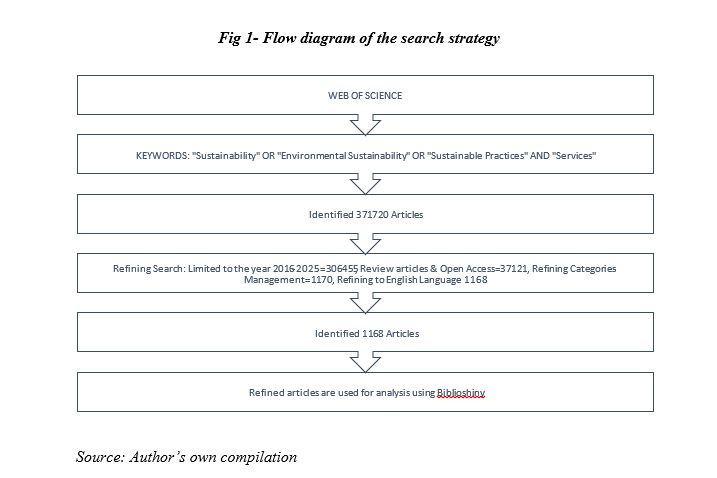
The methodology for this bibliometric analysis, as illustrated in Figure 1, was designed to be both systematic and rigorous, ensuring the study’s academic validity and relevance.The process involved several key steps:
Selecting The Data Source
The Web of Science database was chosen as the primary source due to its broad coverage of high-impact, peer-reviewed academic journals. This selection helped maintain a high standard of research quality throughout the study.
Developing A Keyword Search Strategy
A carefully constructed keyword search was performed using terms such as “Sustainability,” “Environmental Sustainability,” “Sustainable Practices,” and “Services.” This approach was intentionally broad yet focused, allowing the capture of a wide range of relevant literature related to sustainability in service industries.
Initial Data Collection
The initial search provided 371,720 articles, highlighting the massive volume of research in this area. However, this dataset required further filtering to ensure relevance.
Refining the Dataset
For the precise scope and enhance accuracy, various filtering criteria were applied:
Timeframe: The articles published between 2016 and 2025 were included, and refined to 306,455 and ensures that data reflects current trends.
Type of Articles: The following dataset was filtered to include only review articles and open-access publications, resulting in 37,121 articles.
Research Category: To remain focus on service sector sustainability, only articles come under Management were selected, drops down the number down to 1,170.
Language: English-language publications further filtered the dataset to 1,168 articles, ensures clarity and consistency.
Final Dataset Selection
After the entire refining process, a total of 1,168 articles were identified as highly relevant and suitable for the analysis.
Analytical Tool
Analysis was done using Biblioshiny, a interface in the R programming designed for
bibliometric analysis This enabled the visualization of citation networks, thematic
evolution, and research patterns, thereby enhancing the detailing and interpretability of the analysis.
LITERATURE REVIEW
Environmental sustainability in services has become an increasingly explored domain
across disciplines in the last decade. The literature addresses diverse themes, including
technological innovation, sustainable tourism and hospitality, environmental
performance evaluation, social inclusion, stakeholder engagement, and organizational
transformation. This section synthesizes these studies, highlighting thematic trends,
methodological contributions, and empirical insights.
Environmental Performance and Corporate Sustainability
Improving environmental performance has become a major focus for many
organizations, especially with the growing use of advanced analytical tools and decision making models. One notable contribution is by Çiftçi (2024), who developed a detailed framework that combines fuzzy cognitive mapping (FCM) with the Extended Great Deluge Algorithm (EGDA). This approach helps identify the key factors influencing an enterprise’s environmental performance. The study highlights several important enablers, including compliance with environmental regulations, embracing
digitalization, producing eco-friendly goods and services, and enhancing productivity.
Interestingly, fossil fuel usage was found to have a negative impact, underscoring the
difficult trade-offs organizations must navigate on the path to sustainability.
This work demonstrates how AI and heuristic algorithms can be effectively used to model complex systems, reflecting a wider movement in environmental management toward data-informed decision-making. A similar direction is observed in the research by Swarnakar et al. (2023), who studied the adoption of Quality 4.0 in service industries.
Their findings show that digital quality management tools contribute to greater
transparency, efficiency, and customer satisfaction, aligning operational excellence with environmental goals.
In the realm of Environmental, Social, and Governance (ESG) performance, Abbas et al.
(2024) draw attention to the importance of ambidextrous and frugal innovation. Their
research reveals that organizations equipped with strong capabilities—particularly in
effectuation and business analytics—tend to perform better in ESG metrics. By balancing the use of existing resources while also exploring new sustainable practices, these firms can effectively adapt to change and drive performance, especially in environments where resources are limited.
Technological Innovation and Digital Transformation
Technological advancements have significantly influenced the trajectory of environmental sustainability in service sectors. Anshari et al. (2024) explore the role of AI in enhancing public service delivery (PSD), arguing that AI can support the realization of Sustainable Development Goals (SDGs) by improving service efficiency, accessibility, and responsiveness. Their findings show that AI enables precise interventions, facilitates advanced data monitoring, and increases public trust in service delivery—especially in healthcare and education.
The importance of integrating circular economy principles with Industry 4.0 technologies is highlighted in Sehnem et al. (2024), who studied agri-tech startups. Their research identifies the use of digital tools such as sensors, data analytics, geospatial tracking, and real-time platforms as pivotal for promoting operational efficiency and sustainable agricultural practices. The study further emphasizes the role of lean thinking in maximizing human empowerment while maintaining sustainability in technology enabled services.
Such technological integration in services is not limited to public or agricultural contexts. In the hospitality sector, Chaudhary et al. (2025) examine the role of green technology in improving guest safety. Their findings demonstrate that responsible tourism practices and guest satisfaction act as mediating variables in the relationship between technology adoption and perceived safety, thereby reinforcing the interconnectedness of environmental and social dimensions in service sustainability.
Sustainable Tourism and Hospitality
Technological progress has played a crucial role in shaping how environmental
sustainability is approached within the service sector. Anshari et al. (2024) explore how
artificial intelligence (AI) is transforming public service delivery (PSD). They argue that
AI can be a powerful tool for advancing the Sustainable Development Goals (SDGs) by
making services more efficient, accessible, and responsive. Their study highlights how
AI enables targeted interventions, enhances real-time data monitoring, and builds greater public trust—particularly in essential sectors like healthcare and education.
The role of technology in sustainability is also evident in the agri-tech sector. Sehnem et
al. (2024) focus on how Industry 4.0 technologies—including sensors, data analytics,
geospatial tracking, and real-time platforms—can be integrated with circular economy
principles. Their research on Agri-tech startups shows that these digital tools boost
operational efficiency and support more sustainable farming practices. They also
emphasize the value of lean thinking, which promotes not only sustainability but also
empowers people within tech-driven service environments.
This trend isn’t limited to agriculture or public services. In hospitality, Chaudhary et al.
(2025) examine how adopting green technologies enhances guest safety. Their findings reveal that responsible tourism practices and guest satisfaction serve as important links between technological adoption and perceived safety. This underlines the close relationship between environmental sustainability and the social experience in service delivery.
Social and Economic Sustainability
Sustainability in services is no longer limited to environmental measures alone; recent
research increasingly highlights the importance of addressing social and economic
dimensions as well. For example, Chhibber et al. (2023) explore the complex issue of
poverty and suggest that education, employment, and ethical governance are key pathways for alleviation. Their qualitative study underscores the influential roles played by faith-based organizations, public policy, and community-driven efforts in promoting inclusive and sustainable development.
In a similar vein, Iqbal et al. (2024) examine the functioning of microfinance institutions
and find that organizations that encourage knowledge-sharing cultures tend to have
stronger absorptive capacity—the ability to effectively adopt and implement sustainable practices. Their work shows that internal capabilities and cultural values are just as critical as external technologies in supporting long-term sustainability goals.
Turning to the healthcare and education sectors, Abdelnaeim et al. (2023) link service
quality in higher education to student well-being, within the framework of Sustainable
Development Goal 3 (Good Health and Well-being). Their study points to the significance of psychological safety, inclusivity, and institutional care in achieving sustainable service outcomes in education—a sector that often receives less attention in environmental discussions but is essential for building resilient and capable communities.
Marketing, Stakeholder Engagement, and Ethics
Marketing and stakeholder engagement play a vital role in advancing sustainability,
especially by building trust and transparency. Hickman and Stoica (2025) highlight how
sustainability messaging, including credence claims, can do more than just signal
environmental responsibility—it can actively influence social norms and guide how
professionals behave across service industries. Their research shows that such
communication shapes expectations in meaningful ways, not just within individual
organizations but across the entire service ecosystem.
Adding to this, Cheng et al. (2025) provide evidence that CSR disclosures—particularly
those related to environmental protection and employee well-being—enhance how
attractive an organization appears to stakeholders when published on official platforms
like websites. Erbetta and Abrate (2024) further stress the importance of engaging
stakeholders, showing how this can counterbalance monopolistic behavior and lead to
improvements in both environmental outcomes and market competitiveness.
Collectively, these studies illustrate that clear, values-driven communication—combined with ethical leadership and stakeholder involvement—can be powerful tools for driving sustainable change in the service sector.
KEY FINDINGS
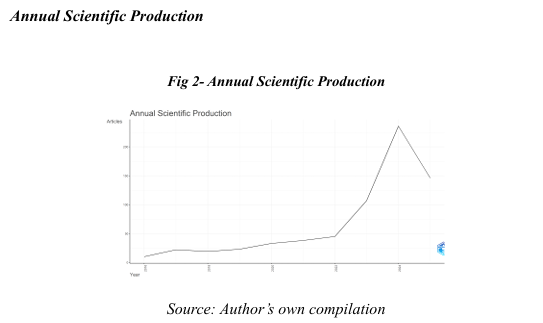
Figure 2, shows a clear upward trend in academic interest in environmental sustainability in service sectors. The publications increase gradually from just 10 articles in 2016 to 45 in 2022, followed by a surge of 107 articles in 2023 and a peak of 236 in 2024. This sharp increase likely reflects the impact of global sustainability policies, growing regulatory requirements, and expanded research funding. Interestingly, there was a drop to 146 articles in 2025, which may signal a phase of stabilization or a shift in research focus.
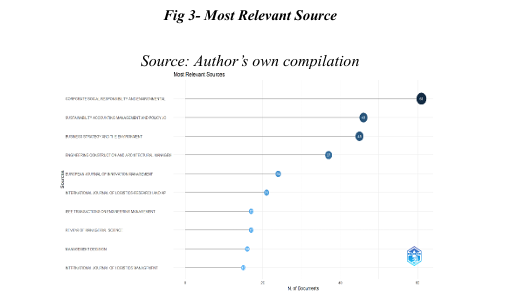
Figure 3 presents the results of the bibliometric analysis, highlighting the leading academic journals that are shaping research on environmental sustainability in service sectors. At the top of the list is Corporate Social Responsibility and Environmental Management, with 61 articles, reflecting the central importance of corporate responsibility in sustainability discussions. This is closely followed by the Sustainability Accounting, Management and Policy Journal (46 articles) and Business Strategy and the Environment (45 articles), both of which emphasize the roles of financial accountability and strategic planning.
Other journals like Engineering, Construction, and Architectural Management (37 articles) and the European Journal of Innovation Management (24 articles) point to the growing relevance of sustainability in infrastructure development, supply chains, and innovation systems. Additionally, IEEE Transactions on Engineering Management and the Review of Managerial Science (each with 17 articles) draw attention to the role of technology and managerial decision-making in promoting sustainable practices. This wide disciplinary coverage highlights how sustainability research cuts across multiple domains—from corporate governance and finance to engineering and operations— emphasizing the need for more cross-sector collaboration and integration in future
research.
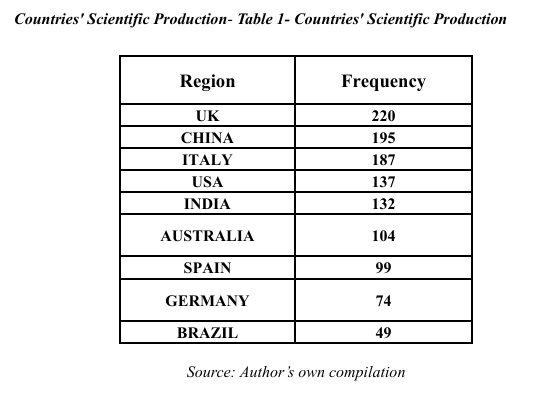
Table 1 offers a snapshot of the global landscape of sustainability research, showing how different countries contribute to the field. The United Kingdom leads with 220
publications, reflecting the impact of its strong academic institutions, supportive policies, and research funding. Close behind are China (195) and Italy (187), where growing emphasis on environmental governance and policy reforms is clearly driving scholarly output.
The United States (137) and India (132) also stand out, with research shaped by evolving
corporate sustainability strategies and pressing socio-economic challenges. Other notable contributors include Australia (104), Spain (99), Germany (74), and Brazil (49)—each reflecting distinct regional priorities and approaches to sustainability.
Overall, this distribution highlights the global importance of sustainability, showing how
academic and policy efforts are converging across borders and encouraging international collaboration and context-specific research.
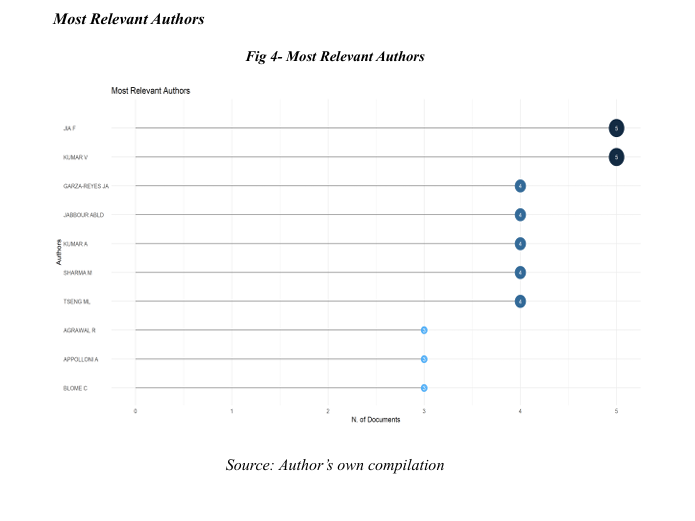
From the Figure 4 the identification of leading authors in sustainability research within
service sectors provides insight into intellectual thought leadership and knowledge dissemination. The most prolific authors contribute to shaping key discussions, advancing theoretical frameworks, and developing empirical methodologies. Their work serves as a foundation for future studies, guiding emerging scholars in the field.
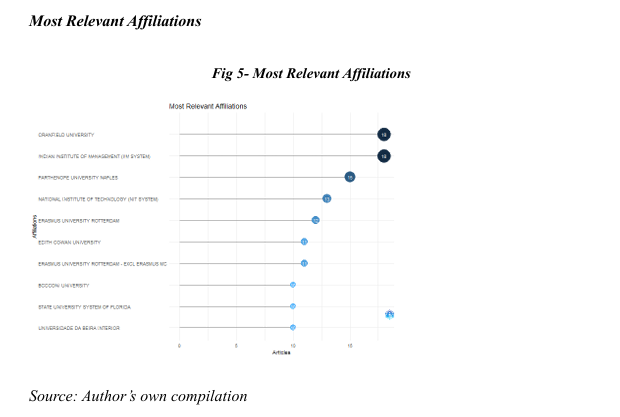
From the figure 5 the analysis of institutional affiliations highlights the leading research
institutions engaged in sustainability studies. These affiliations indicate where the strongest research networks exist and where sustainability studies are being actively promoted through academic and policy-oriented initiatives. Universities and research centers specializing in environmental sustainability play a pivotal role in fostering interdisciplinary collaboration and policy development.
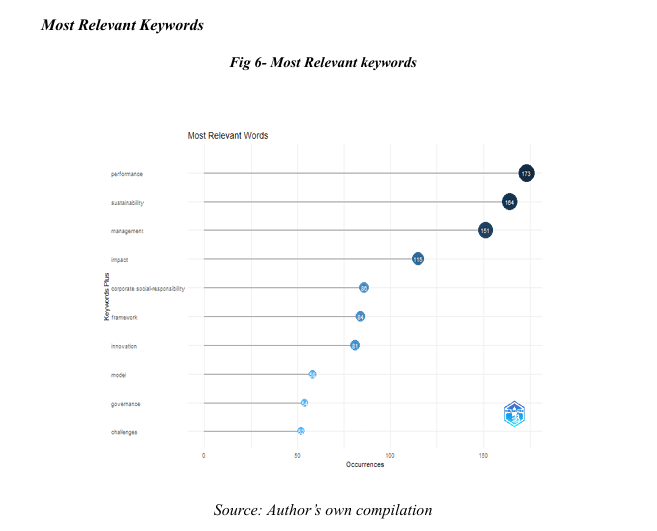
The most frequently occurring keywords as of figure 6 in the bibliometric analysis reflect core research themes and emerging areas of interest. Keywords such as “sustainability,” “performance,” “management,” and “corporate social responsibility” indicate major focus areas within the field. The presence of terms like “innovation,” “supply chain,” and “financial performance” suggests interdisciplinary connections between business sustainability, operational efficiency, and environmental responsibility.
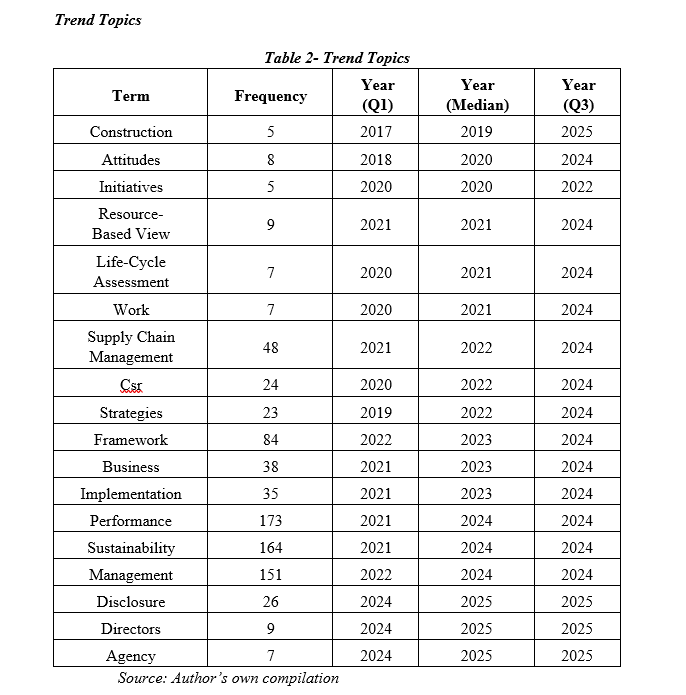
The table 2 showcases the evolution of research themes over a period of time. It shows
how earlier studies emphasized on general sustainability principles, whereas recent
research has moved towards more specific areas such as green technology, digital
transformation, and sustainable business models. This change highlights the dynamic
nature of sustainability discourse and the changing complexity of challenges addressed by researchers.
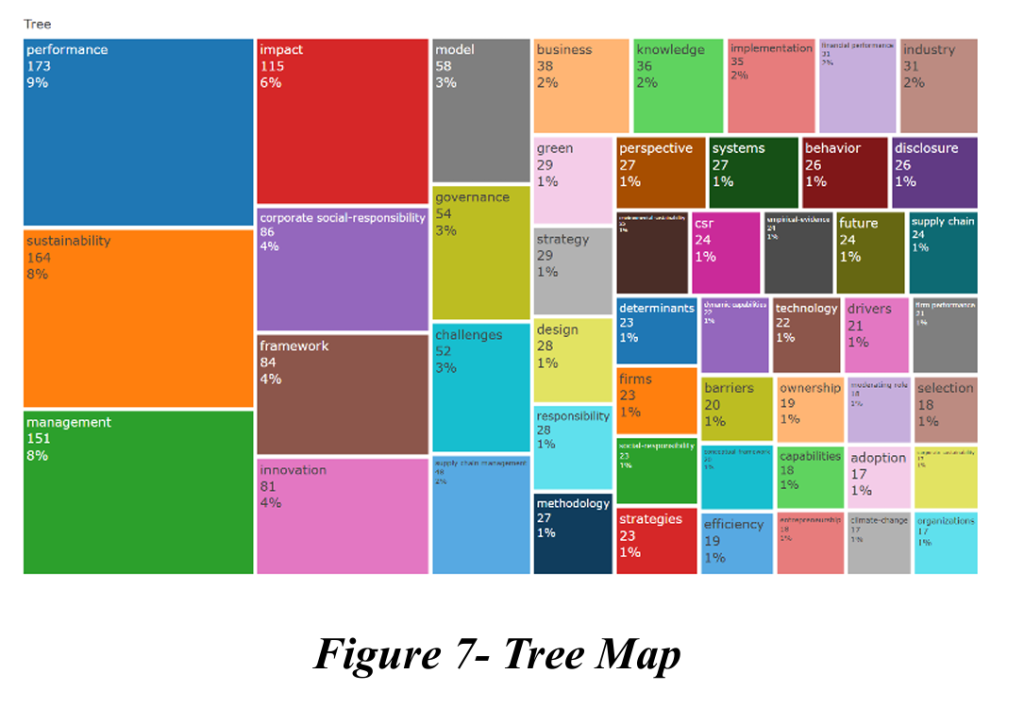
The figure 7 represents the relevant keywords of research in environmental sustainability within service sectors. It provides an overview of how different themes interconnect, aids researchers identify dominant and emerging keywords.
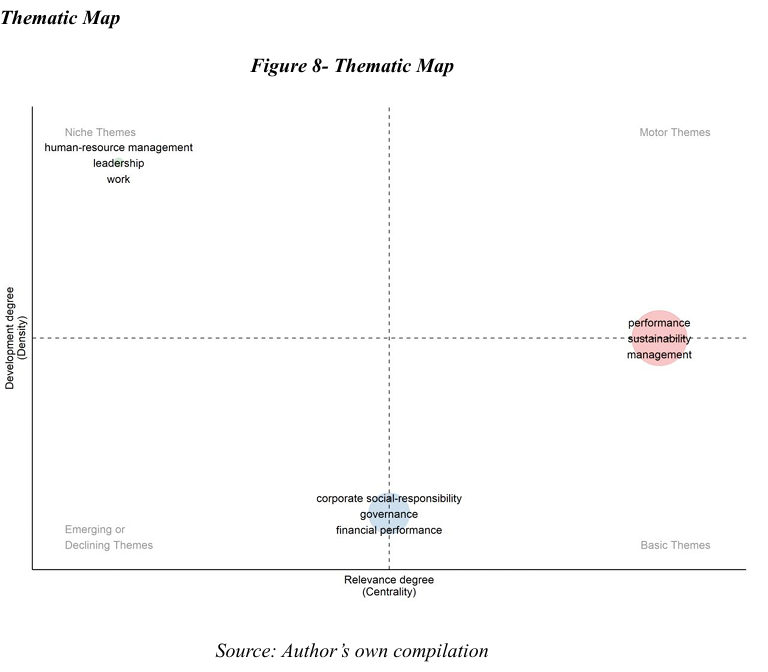
Figure 8 represents the thematic map and classify the key themes based on two
dimensions: centrality (degree of relevance to the field) and density (degree of internal
development). The thematic map is divided into four quadrants—motor themes, niche
themes, basic themes, and emerging or declining themes.
In the above map, several themes lie in the borders of these quadrants, suggesting that they share characteristics of multiple themes rather than fitting into a single theme.
The quadrant containing performance, sustainability, and management is positioned
between the motor themes and basic themes quadrants. This shows that these themes are highly central and influential in the field, their level of development is still changing.
And the themes such as corporate social responsibility, governance, and financial performance appear in the intersection of basic and emerging quadrants. This suggests that these topics are identified for their relevance but they are still in the early or underdeveloped stages. They hold huge potential for future exploration and stronger conceptual building.
Followed by the niche themes area, topics like human-resource management, leadership, and work showcases high density but low centrality. Even though these are well developed within their specific domains, their broader influence across the field is
limited.
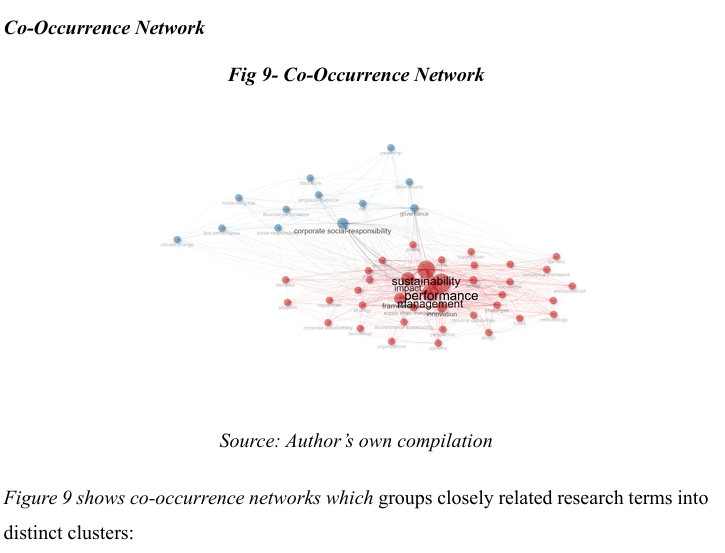
- Red Cluster: Centers on “Sustainability,” “Performance,” and “Management,”
highlighting research on sustainability outcomes, innovation, and strategy. - Blue Cluster: Focuses on “Corporate Social Responsibility” and “Governance,”
emphasizing corporate accountability, transparency, and ethical business practices. - Central Nodes: Key terms like “Sustainability,” “Performance,” and “Corporate Social
Responsibility” act as hubs linking various sustainability-related themes. - Connections and Relationships: Strong co-occurrence between “Sustainability” and “Performance” and between “Corporate Social Responsibility” and “Governance” indicates interdisciplinary research intersections.
IMPLICATIONS
- Surging Academic Focus: The surge in publications shows a growing academic and industry-wide acceptance of sustainability’s importance in service industries. The trend is driven by increasing regulatory demands, shifting consumer expectations, and a stronger demand on corporate social responsibility.
- Opportunities to cover up the Research Gaps: The absence of dominant themes suggests that the field is still developing and fragmented to an extent. This shows an opportunity for researchers to create more integrated frameworks that bring together scattered thoughts and address underexplored areas.
- Inviting More Inclusive Perspectives: A notable gap is the limited involvement of developing countries in sustainability research. There’s a need for research that showcases the challenges and opportunities in these regions, making sustainability discussions more globally inclusive.
- Interdisciplinary Collaboration: We can see the overlap between topics such as management, governance, and performance points to the need for cross-disciplinary approaches. Approaching sustainability in service sectors effectively requires drawing on expertise from economics, technology, environmental science etc.
DISCUSSION
digitalization and green supply chains—signals a growing emphasis on practical,
industry-specific challenges.
At the same time, the absence of dominant or recurring themes points to the field’s current diversity and somewhat fragmented nature. Without a unified theoretical or methodological foundation, sustainability research in service sectors remains broad and dispersed. This gap, however, creates a valuable opportunity for future research to synthesize these varied perspectives and develop more cohesive and practical frameworks that can guide sustainability efforts more effectively.
Another important takeaway is the clear geographical imbalance in contributions. Scholars from developing regions remain underrepresented, despite the fact that sustainability challenges often look very different—and more urgent—in those contexts. Encouraging more inclusive and collaborative research that brings in perspectives from emerging economies is essential for creating a fuller, more globally relevant picture of sustainability.
Lastly, the way themes such as management, governance, and performance intersect highlights the layered complexity of sustainability issues. This underscores the growing need for interdisciplinary approaches that bridge business strategy with environmental and social considerations—an essential step in crafting innovative, resilient, and forward thinking solutions for the future.
CONCLUSION
At the same time, the study brings to light some important gaps. Notably, there is still no
clear or consistent research theme that ties the field together, and scholars from developing countries remain underrepresented. These gaps present valuable opportunities for future work—both to create more integrated research frameworks and to include voices from regions that often face the most pressing sustainability challenges.
By tracing how knowledge in this area has evolved, the analysis helps researchers spot emerging directions, deepen theoretical understanding, and build stronger interdisciplinary partnerships. Ultimately, the aim is to support the shift toward more sustainable service practices—equipping businesses and policymakers with insights that align with both environmental priorities and global sustainability goals.
REFERENCES
and frugal innovation for enhanced ESG performance of entrepreneurial firms.
International Entrepreneurship and Management https://doi.org/10.1007/s11365-024-01062-5
Abdelnaeim, S., El‐Bassiouny, N., & Hauser, C. (2023). The role of service quality in
achieving sustainable development goal 3: Shaping students’ psychological well
being in an Egyptian higher education context. Management & Sustainability: An
Arab Review. https://doi.org/10.1108/msar-07-2023-0036
Anshari, M., Hamdan, M., Ahmad, N., & Ali, E. (2024). Public service delivery, artificial
intelligence and the sustainable development goals: Trends, evidence and
complexities. Journal of Science and Technology Policy Management.
https://doi.org/10.1108/jstpm-07-2023-0123
Çiftçi, P. K. (2024). Mapping the way to a dark green enterprise: Fuzzy cognitive map
based analysis of factors affecting environmental performance for sustainable
development. Business Process Management Journal. https://doi.org/10.1108/bpmj-12-2023-0976
Chaudhary, H. K., Singh, M., & Ghosh, P. (2025). The impact of green technology on
guest safety: The mediating roles of responsible tourism practices and guest
satisfaction. Journal of Hospitality and Tourism Insights. https://doi.org/10.1108/jhti-09-2024-0953
Chen, G., Zhao, C., & Li, C. (2024). Mental health and well-being in tourism: A Horizon
2050 paper. Tourism Review. https://doi.org/10.1108/tr-12-2023-0864
Cheng, F.-C., Wu, C.-C., & Wu, L. H. (2025). The impacts of website information
disclosure on organizational attractiveness: The moderating effect of corporate
social responsibility performance. Humanities and Social Sciences Communications, 12. https://doi.org/10.1057/s41599-025-04413-x
Chhibber, P., Paposa, K. K., & Dhand, S. (2023). Qualitative inquiry suggesting needed pathways: Economic, social, religious, political and industrial—An activist
research on poverty. Journal of Strategy and Management. https://doi.org/10.1108/jsma-04-2023-0081
Erbetta, F., & Abrate, G. (2024). Unraveling the joint effect of firm and stakeholder pro
environmental engagement on firm economic rewards: An application to waste
management services. Social Responsibility Journal. https://doi.org/10.1108/srj
04-2024-0290
Hickman, T. M., & Stoica, M. (2025). Reimagining service provider influence: How they embrace and promote sustainability. Journal of Services Marketing. https://doi.org/10.1108/jsm-03-2024-0121
Iqbal, S., Ullah, S., Rizwan, A., Nazeer, N., Rasheed, M., & Siddiqi, A. F. (2024). The impact of organizational culture on knowledge sharing and absorptive capacity: A study of the microfinance institutions in Pakistan. South Asian Journal of Business Studies. https://doi.org/10.1108/sajbs-01-2024-0038
Okumuş, B. (2024). Will the decrease in food availability affect food tourism? A historical and contemporary perspective: Horizon 2050 article. Tourism Review. https://doi.org/10.1108/tr-03-2024-0174
Pan, Y. (2025). Securing customer loyalty in the highly competitive Chinese hospitality market: An examination of the influence of sustainability, service quality, and brand equity. Journal of Quality Assurance in Hospitality & Tourism. https://doi.org/10.1080/1528008x.2025.2460202
Sehnem, S., Junges, I., Soares, S. V., & Maganda, A. (2024). Reconciling the efficiency of Industry 4.0 and circular economy with the human empowerment of lean: Unraveling the challenges and opportunities of integration. Social Responsibility Journal. https://doi.org/10.1108/srj-01-2024-0011
Subarsono, A., Rahmawati, I. Z., Laksana, L. U. A., Prabawati, V. D. N., Wessiani, N. A., & Sulistiono, B. (2025). Poverty alleviation for coastal communities through tourism development: A case study of Kulon Progo Regency. Journal of Policy Research in Tourism, Leisure and Events. https://doi.org/10.1080/19407963.2025.2465323
Swarnakar, V., McDermott, O., Sony, M., Bhat, S., & Antony, J. (2023). Unveiling the path to sustainable Quality 4.0 implementation in organisations: Insights from an exploratory qualitative study. The TQM Journal. https://doi.org/10.1108/tqm-07 2023-0201