Dr. Suraj E, Associate Professor, KCT Business School, Coimbatore, Tamil Nadu
Anil Kumar M, Assistant Professor, GH Raisoni University, Maharashtra
Buggavarapu VSS Subba Rao, Assistant Professor, KCT Business School, Tamil Nadu
ABSTRACT
This study proposes a Strategic Growth Framework aimed at fostering
sustainable economic development in India by addressing key areas of social
equity, infrastructure, and industrial growth. By prioritizing support for
marginalized communities, enhancing agricultural income, and empowering
small-scale industries through Self-Help Groups (SHGs), the framework
seeks to lay the foundation for inclusive progress. Additionally, it
underscores the importance of human capital development through expanded
access to higher education and advocates for leveraging India’s vast tourism
potential, currently contributing approximately 5% to the GDP, as a
significant growth driver. The model draws inspiration from Kerala’s
successful approach to human capital development, with universal education
access as a means to ensure widespread economic benefits.Further, the study
suggests policies to encourage investment from the Indian diaspora, which
annually contributes over $100 billion in remittances. By granting diaspora
investors a special status, India could attract additional funds into critical
sectors like infrastructure, technology, and education, accelerating the
country’s economic trajectory. Through these strategies, India can evolve
from a predominantly service-oriented economy to a global hub of
entrepreneurship and innovation. Over the next 25 to 50 years, this model
envisions India as a leader in the global economy, capitalizing on its human
capital and strategic investments to drive sustainable growth and
international influence.
KEYWORDS: Strategic model, Self Help Group, Sustainable Growth,
human capital, GDP, Inclusive progress.
INTRODUCTION
In a country like India, a significant portion of the population resides in rural areas,
approximately 65 percent as per recent data. Despite varying levels of growth across
industry, business, agriculture, technology, and transportation in India, sustainable
development efforts have contributed to improving the overall living standards. A key
factor driving this development has been India’s focus on “Human Capital.”
Since the 1970s, India has undergone a notable shift in its approach to education, with
increased emphasis on delivering foundational education to all sections of society.
Campaigns like “Sarva Shiksha Abhiyan” have been instrumental in advancing literacy
rates and enhancing India’s human capital base. Previously, the economic contributions
of the Indian diaspora, or Non-Resident Indians (NRIs), were a significant driver of
economic growth, particularly through remittances. These remittances boosted the
purchasing power of the population, which in turn spurred demand within the domestic
market, leading to visible improvements among the middle and lower-middle classes.
Looking to the future, in rural India, NGOs, farmers, and the working class are expected
to play a pivotal role in shaping the country’s economic growth. Their contributions
toward agricultural innovation, grassroots development initiatives, and skill-building
programs will be crucial for sustaining and expanding India’s economic trajectory.
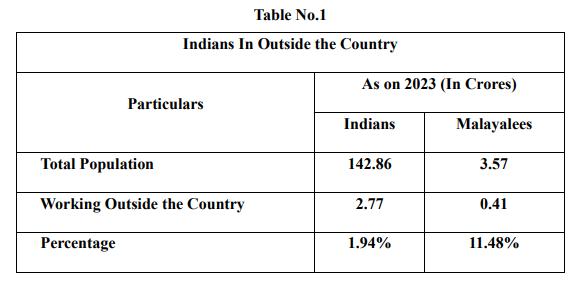
In India, a substantial portion of the population works abroad, although this figure is
lower than that of some states like Kerala, where over 10% of the population is employed
overseas. For India as a whole, income from expatriate workers and businesspeople, particularly through remittances, is a significant contributor to the national economy. These remittances bolster household incomes, support local businesses, and enhance the overall purchasing power in communities, especially in states with high migration rates, thereby driving economic growth in those areas
REVIEW OF LITERATURE
Ahluwalia (2002) evaluates India’s gradual economic reforms since 1991, highlighting
both successes and challenges in achieving sustainable growth. The paper underscores
the importance of maintaining a balanced approach to liberalization while addressing
social equity. Balakrishnan and Parameswaran (2007) analyse the factors contributing to
economic growth in India, emphasizing the critical role of policy initiatives and
institutional frameworks in driving development. They argue for a more inclusive
approach to ensure that growth benefits all segments of society.
Basu and Maertens (2010) explore the patterns of economic growth in India, linking it to
structural changes in the economy and the necessity for improved human capital. Their
findings suggest that enhancing education and skills is essential for sustaining long-term
growth. Bhagwati and Panagariya (2012) challenge prevalent myths surrounding India’s
development trajectory, advocating for a focus on market-driven solutions to economic
challenges. They emphasize the importance of human capital and education in fostering
entrepreneurship and innovation.
Bhattacharya and Gupta (2019) examine the potential of diaspora bonds as a development
finance mechanism in India, highlighting their ability to mobilize resources for national
development. Their analysis presents a strategic approach to leveraging the financial
contributions of the Indian diaspora. Bloom et al. (2003) discuss the demographic
dividend and its economic implications, arguing that India’s youthful population presents
a unique opportunity for growth. They emphasize the need for investments in education
and health to capitalize on this potential.
Chandrasekhar (2011) provides insights into post-reform industrialization in India,
analysing urbanization patterns and the resilience of the informal sector. The study
suggests that fostering inclusive industrial policies is crucial for sustained economic
growth. Chatterjee and Subramanian (2020) investigate the relationship between human capital and economic growth in India, finding significant positive correlations. They
advocate for policies that enhance educational access and quality to drive economic
progress.
Dev (2006) focuses on the intersections between agriculture, employment, and poverty
in India, stressing the importance of agricultural reforms for rural development. The
study highlights the need for targeted policies to uplift marginalized farming
communities.Duflo and Banerjee (2011) present a comprehensive analysis of poverty
alleviation strategies, emphasizing evidence-based interventions that target the root
causes of poverty. Their work advocates for a nuanced understanding of economic
challenges in India.
Ghosh (2009) critically assesses the economic growth trajectories of India and China,
exploring the implications of their differing approaches to development. The paper
argues for the importance of inclusive growth models that consider social welfare.Goyal
(2016) highlights the significance of innovation in driving industrial growth in India,
arguing that small-scale enterprises play a vital role in economic development. The study
recommends policies that support entrepreneurship and technological advancement.
Haque and Yusoff (2017) explore the role of the Indian diaspora in fostering foreign direct
investment and economic growth, emphasizing their contributions to national
development. They advocate for policies that encourage diaspora engagement in
domestic industries.Jain and Mahadevan (2012) analyze the impact of self-help groups
on poverty alleviation and skill development in India’s informal sector. Their findings
demonstrate the effectiveness of collective action in empowering marginalized
communities.
Kapur and Ramamurti (2001) investigate the relationship between diaspora engagement
and development outcomes in India, emphasizing the potential of diaspora investments
in driving economic growth. Their study calls for enhanced policies to facilitate such
contributions.Kohli (2004) argues that state-directed development has been pivotal for
industrialization in India, highlighting the role of political power in shaping economic
policies. The study suggests that a proactive government approach is essential for
fostering growth .Mazumdar (2010) examines the relationship between agricultural growth and employment generation in India, advocating for policies that enhance
productivity in the agricultural sector. The findings stress the need for a balanced
approach to rural and urban development.
Mishra and Parikh (2019) highlight the transformative impact of self-help groups on
women’s empowerment in rural India, showcasing how collective efforts can address
social issues. Their research emphasizes the potential of SHGs in fostering sustainable
development.Mukherjee (2015) investigates the link between infrastructure development
and economic growth in India, highlighting the need for investment in transport and
utilities to stimulate industrial activity. The study emphasizes the importance of strategic
infrastructure planning.
Nagaraj (2011) analyzes trends in growth and employment in India, arguing that
employment generation must be a priority for sustainable economic progress. The paper
highlights the challenges faced by various sectors in absorbing the growing labor force.
Panagariya (2008) presents a comprehensive overview of India’s economic journey,
advocating for market-oriented policies to sustain growth. The book emphasizes the need
for continued reforms to enhance India’s competitiveness on the global stage.
Ramesh and Sethi (2018) explore the role of tourism in driving sustainable economic
development in India, highlighting its potential to create jobs and generate income. Their
study calls for policies that support the growth of the tourism sector.Sen and Dreze (2013)
critically assess India’s socio-economic contradictions, arguing for a more equitable
distribution of resources to achieve sustainable development. Their work emphasizes the
need for inclusive policies that address the needs of marginalized populations. Sharma
and Singh (2014) examine the impact of remittances on development outcomes in India,
highlighting the significant role of diaspora contributions in driving economic growth.
Their study recommends policies that leverage remittance flows for national
development.
Yesterday’s Struggle – Indian Economy
Even after the abolition of caste-based discrimination, individuals from marginalized
communities across India continued to face restricted access to formal education and
economic opportunities. Following independence, the Indian government prioritized providing basic education to all segments of society. This emphasis on education sparked
a transformative movement across the nation, in some regions having a more profound
impact than even major policy reforms like the Land Reforms Act.
In the early 1950s, employment opportunities within India were limited, prompting many
to seek jobs abroad. However, the conditions faced by Indian migrant workers were often
harsh. Many were compelled to work extremely long hours, sometimes up to 16 hours a
day, for minimal wages. In the early years, a large number of Indians endured nearexploitative conditions in various parts of the world, with only basic facilities available
for survival. This diaspora laid the foundation for the current strong Indian presence in
the global workforce, though at great personal cost in the early days.
Today’s Workforce – The Indian Economy
Since the 1980s, India has witnessed a shift as many previously marginalized
communities leveraged improved English language skills and expanded educational
access to seek better job opportunities abroad. Initiatives focused on literacy and
education empowered countless Indians to secure well-paying positions, especially in the
Middle East and other countries, where many achieved significant roles within various
organizations. The substantial remittances they sent home have been a vital driver of
economic growth in India, with migration proving to be a powerful force in poverty
alleviation, particularly in states with high emigration rates.
In addition, Non-Resident Indians (NRIs) have contributed significantly to India’s
foreign currency reserves through deposits, which has strengthened the banking sector
and enabled greater lending capacity to support industrial development domestically.
This financial influx has created new opportunities for small businesses, local services,
and daily wage workers in India, especially in regions with high migration. The
remittances have also driven growth in the real estate sector, boosting economic
advancement and improving living standards across all socioeconomic groups
With abundant opportunities available in Europe and other developed nations, many
young Indians are pursuing higher education abroad, often funding their studies with
bank loans. As the population in many European countries declines and with India
recently surpassing China as the most populous nation, the proportion of young people in Europe is decreasing, alongside shifts in lifestyle and career priorities. Over the next
25 years, Indians are well-positioned to manage critical sectors globally, taking on
influential roles in finance, administration, healthcare, technology, and management.
While they currently serve as skilled professionals in these countries, these “servants”
will increasingly become entrepreneurs and leaders, playing essential roles in the growth
and sustainability of other economies.
Back home, India faces the challenge of creating substantial employment opportunities
for its youth. Certain regions still contend with issues such as inadequate food production
and job shortages, leading to a heavy reliance on other states for essential goods and
employment. As more young Indians move abroad, particularly to Europe, two potential
issues arise. First, as they invest more of their earnings in their host countries, the flow
of remittances to India may decline, affecting local economies. Second, with their
children growing up overseas, their visits to India may decrease over time, leading to a
possible weakening of cultural ties and economic engagement.
To address these concerns, the government could introduce more favorable policies
encouraging the Indian diaspora to reinvest in their homeland. Incentives for expatriates
to channel their earnings back into India would not only support economic growth but
also help preserve familial connections and cultural heritage. Through such strategic
measures, India can harness the potential of its global diaspora while fostering robust job
opportunities and economic resilience domestically
Model for India’s Economic Development in the Future
I. Creating Entrepreneurs in Agriculture (FFF Model: Food Grain, Finance,
Farmers’ Producer Organization)
- Food Grain Production: Expanding access to clean, reliable energy sources like solar
power can significantly aid farmers and agribusinesses in boosting food production and
engaging in value-added processing. For off-grid farmers, replacing costly diesel
generators with solar technologies would empower India’s farming communities,
especially those from marginalized backgrounds, to increase food grain production
sustainably. - Financing Small Farmers: Transitioning to regenerative agriculture calls for innovative
financing models. Ecosystem Service Markets (ESM), which reward farmers for
providing ecological and societal benefits, represent a promising approach. This model
supports farmers financially while promoting environmentally sustainable practices. - Farmers’ Producer Organizations (FPOs) in India: FPOs enable farmers to work
collectively, enhancing their bargaining power and creating economies of scale.
Supported by the Small Farmers’ Agribusiness Consortium (SFAC), FPOs can drive
agricultural development across India by aggregating inputs and outputs, strengthening
market access, and stabilizing income for small-scale farmers.
II. Creating Entrepreneurs in Other Sectors (SSS Model: Self-Help Groups, Small Scale Industry, Spice Export through FPO)
- Self-Help Groups (SHGs): SHGs empower rural communities by addressing poverty
and skill gaps through collective action. By promoting self-employment and poverty
alleviation, SHGs provide essential support for rural development and women’s
empowerment across India. - Special Package for Small-Scale Industry: Small-scale entrepreneurs need targeted
financial support, including moratoriums on existing loans and interest waivers. This
financial package would help sustain and expand small-scale industries, which play a
vital role in India’s economy by creating employment and supporting local supply chains. - Spice Export through FPOs: India is one of the largest spice producers in the world,
but recent export levels have declined. Small farmers can collaborate through FPOs to
focus on global spice markets, with government assistance for exports through Indian
ports. This approach would boost both rural income and India’s position in international
spice markets.
III. Infrastructural Development (RSR Model: Road, Sea Port, Rail)
- Road Network: India should focus on upgrading and maintaining its extensive road
network rather than prioritizing new road construction. Improving existing infrastructure
can reduce transportation costs, enhance trade efficiency, and foster regional
connectivity, benefiting rural and urban areas alike. - Sea Port Infrastructure: To support industrial growth, India should develop and
modernize its ports with private sector collaboration. Improved port infrastructure can enhance export potential, generate employment, and promote trade, especially benefiting
the country’s coastal states. - Rail Infrastructure: India’s rail network is vital to its economy but requires further
modernization and expansion to meet growing demands. Forming cooperatives or
associations of marginalized communities to support rail infrastructure development
could provide both investment and employment opportunities, especially in
underdeveloped regions.
IV. Human Capital Development through Higher Education
To harness future global opportunities:
- Identify Opportunities: Conduct studies to assess emerging career and skill
opportunities across different countries to guide Indian youth toward high-demand
sectors. - Support Talented Students: Identify and mentor promising students interested in global
careers and innovation, encouraging them to take on leadership roles. - Facilitate Education: Provide accessible financing options like bank loans and
scholarships for higher education, particularly for economically disadvantaged students,
to enhance their opportunities in high-skilled sectors worldwide.
This strategic framework leverages India’s strengths in agriculture, entrepreneurship,
infrastructure, and human capital to drive inclusive and sustainable economic growth,
ensuring that the country remains competitive on a global scale while uplifting
communities domestically.
Conclusion
This study proposes a new model for India’s economic growth, emphasizing the
protection of marginalized communities through targeted infrastructure development,
enhancing farmers’ incomes, and fostering industrial growth through Self-Help Groups
(SHGs). It highlights the importance of human capital development via higher education
and suggests capitalizing on India’s diverse tourism potential, which currently
contributes approximately 5% to the GDP. By implementing this model, India can shift
from a predominantly service-oriented economy to a nation of entrepreneurs and global leaders .India’s literacy rate has grown from 18.3% in 1951 to over 77% today,
showcasing the transformative impact of accessible education. Other states can adopt
Kerala’s model of human capital development and universal access to basic education to
ensure inclusive economic growth that reaches all social strata. To further support this
transformation, the government should introduce policies to attract investment from the
Indian diaspora, which currently contributes over $100 billion in annual remittances,
among the highest in the world. Granting diaspora members, a special investment status
could encourage them to reinvest in sectors like infrastructure, technology, and
education, accelerating India’s growth trajectory. With these concerted efforts, Indians
are well-positioned to assume leadership roles in the global economy within the next 25
to 50 years, strengthening India’s influence and positioning it as a hub of innovation,
leadership, and sustainable development.
ACKNOWLEDGEMENT
In acknowledging the contributions to this study, I would like to express my sincere
gratitude to the authors of the reviewed literature for their invaluable insights into India’s
economic growth strategies. Their research has provided a solid foundation for
understanding the complexities of marginalized communities, infrastructure
development, and human capital in the Indian context. I also appreciate the guidance and
support received from mentors and peers throughout this research process. Finally, I
extend my thanks to the institutions and organizations that have facilitated access to
resources and data essential for this evaluation.
CONFLICT OF INTEREST
The authors declare that there are no conflicts of interest associated with this study. All
research findings and interpretations presented are based solely on the reviewed literature
and independent analysis. There were no financial or personal relationships that could be
perceived as influencing the research outcomes. The integrity of the research process has
been maintained to ensure objectivity and credibility in the evaluation of India’s
economic growth strategies.
REFERENCES
Ahluwalia, M. S. (2002). Economic reforms in India since 1991: Has gradualism worked?
Journal of Economic Perspectives, 16(3), 67–88.
Balakrishnan, P., & Parameswaran, M. (2007). Understanding economic growth in India:
A prerequisite. Economic and Political Weekly, 42(27), 2915–2922.
Basu, K., & Maertens, A. (2010). The pattern and causes of economic growth in India.
Oxford Review of Economic Policy, 26(4), 331–360.
Bhagwati, J., & Panagariya, A. (2012). India’s tryst with destiny: Debunking myths that
undermine progress and addressing new challenges. MIT Press.
Bhattacharya, S., & Gupta, N. (2019). Diaspora bonds and development finance in India:
A strategic approach. International Journal of Development Issues, 18(3), 304–315.
Bloom, D. E., Canning, D., & Sevilla, J. (2003). The demographic dividend: A new
perspective on the economic consequences of population change. RAND
Corporation.
Chandrasekhar, C. P. (2011). India’s post-reform industrialisation: Urbanisation, sectoral
growth, and informal sector resilience. Cambridge Journal of Economics, 35(5),
849–874.
Chatterjee, S., & Subramanian, A. (2020). Human capital and economic growth in India.
Indian Journal of Economics, 101(4), 572–590.
Dev, S. M. (2006). Agriculture, employment, and poverty: A policy perspective. Economic
and Political Weekly, 41(6), 270–281.
Duflo, E., & Banerjee, A. (2011). Poor economics: A radical rethinking of the way to fight
global poverty. Public Affairs.
Ghosh, J. (2009). Economic growth in India and China: A critical analysis. Development
and Change, 40(2), 215–239.
Goyal, A. (2016). Innovation and growth in Indian industry. Economic and Political
Weekly, 51(38), 12–18.
Haque, S. E., & Yusoff, R. (2017). The role of diaspora in fostering FDI and economic
growth in India. Journal of Global Diaspora, 5(2), 89–105.
Jain, D., & Mahadevan, R. (2012). Inclusive growth in India’s informal sector: Policies and
practices. Social Indicators Research, 107(2), 451–467.
Kapur, D., & Ramamurti, R. (2001). Diaspora and development: A case study of India.
Global Networks, 1(2), 157–184.
Kohli, A. (2004). State-directed development: Political power and industrialization in the
global periphery. Cambridge University Press.
Mazumdar, D. (2010). Agricultural growth and employment generation in India.
Development Economics Journal, 45(2), 231–246.
Mishra, P., & Parikh, A. (2019). Self-help groups and women’s empowerment in rural
India. Journal of Developing Societies, 35(1), 21–45.
Mukherjee, S. (2015). Infrastructure and economic growth in India. Journal of
Infrastructure Development, 7(2), 117–136.
Nagaraj, R. (2011). Growth and employment in India: Trends and prospects. Indian Journal
of Labour Economics, 54(1), 1–15.
Panagariya, A. (2008). India: The emerging giant. Oxford University Press.
Ramesh, J., & Sethi, K. (2018). Tourism as a tool for sustainable economic development in
India. Journal of Tourism Studies, 14(3), 212–228.
Sen, A., & Drèze, J. (2013). An uncertain glory: India and its contradictions. Princeton
University Press.
Sharma, R., & Singh, N. (2014). Diaspora, remittances, and development: Indian case
studies. World Development, 56, 280–293.